AI Agent Reliability
Creating agents is easy. Making them reliable is still hard.
An unreliable agent does not go down. It stays up, returns something fluent, and is wrong — after calling the wrong tool, looping until a limit cut it off, or acting on a value another agent invented. Frameworks like CrewAI and LangGraph make that behavior easy to build and hard to verify, because the execution path is decided at runtime. Reliability is the work of recording what actually happened, bounding what can happen, and proving the failure rate went down.
What it means
Reliability is not uptime, and it is not accuracy either
Traditional reliability engineering has a clean definition of failure: the request errored, or it was too slow. Agents break that definition. The request succeeds, in 900 milliseconds, and the answer is wrong — so every SLO you already had reports green through the entire incident.
Agent reliability is also not the same as model accuracy. A perfectly accurate model still produces an unreliable agent if the tool schema drifts, the retry is not idempotent, the loop is unbounded, or one agent's fabricated value is trusted by the next one. Most production agent incidents are orchestration bugs wearing a model's clothes.
The useful framing is this: an agent is reliable to the extent that its outcomes are correct, bounded, and repeatable. Correct, meaning the outcome matches what the task asked for, checked by something other than the model's own confidence. Bounded, meaning there is a ceiling on iterations, cost, and blast radius, and hitting a ceiling is recorded as a distinct result rather than a silent truncation. Repeatable, meaning the same input produces an equivalent outcome often enough that a change in that rate is a signal you can act on.
None of those three are observable from a status code. All three are observable from a trace, if the trace captured the structure of the run rather than a flat list of model calls.
What breaks
Six failure modes that survive every green dashboard
These are orchestration failures, not model failures. Each one returns a plausible result and exits successfully.
Unbounded loops
An agent keeps calling the same tool, or two agents delegate back and forth, until an iteration cap or a rate limit ends the run somewhere arbitrary. The cost is real and the ending is not a decision.
Silent truncation
A run that stops at max_iter or a recursion limit answers with whatever context it accumulated. Partial work is returned as complete work, and nothing distinguishes it from success unless the limit was recorded.
Swallowed tool errors
A tool raises, the framework hands the error back to the model to recover from, and the model writes around it — sometimes inventing the value it failed to fetch. The invented value then flows downstream as data.
Output contract drift
A step declares a schema, the model returns something that almost fits, and parsing succeeds often enough that failures look random instead of systematic.
Non-idempotent retries
A step with a real side effect succeeds, a later step fails, and the retry or checkpoint resume repeats the effect. Frameworks replay execution; they do not un-send the email.
Wrong-but-valid routing
A conditional branch or a manager agent picks a legitimate path that was the wrong path for this input. The run completes cleanly. Only the outcome is wrong.
The path
Four steps from working demo to reliable agent
Trace the run structure, not the calls
Record agents, tasks or nodes, delegations or edges, tool inputs and outputs, and the limits each run consumed. A flat list of model calls loses the control flow, and control flow is where orchestration bugs live.
Classify failures instead of counting them
Split one error count into timeout, tool error, schema mismatch, limit-truncated, empty result, and wrong-branch. Each class has a different fix, and an undifferentiated count hides which one is growing.
Bound what can happen
Iteration and recursion ceilings, validated tool arguments, idempotency keys on side effects, and guardrail policies on inputs and outputs — so the worst case is a recorded stop rather than an open-ended run.
Prove the failure rate moved
Tie traces to outcomes — resolved, handed off, abandoned — so a fix shows up as a change in deflection rate, resolution rate, and cost per resolution rather than as a claim in a changelog.
By framework
Reliability looks different per orchestrator
The signals are the same. What changes is the structure you have to record, because each framework decides control flow in its own way.
CrewAI
Role-based agents, task chaining, and delegation — with a manager LLM assigning work at runtime in the hierarchical process. Delegation cycles, max_iter truncation, and task output drift are the failures to watch.
LangGraph
Cycles, shared mutable state, checkpoints, and human-in-the-loop interrupts. Runaway loops, state corrupted by a reducer, stalled interrupts, and non-idempotent resumes are the failures to watch.
Everything else
LangChain, LlamaIndex, and hand-rolled orchestration ingest through the same OTLP endpoint using the OTel GenAI semantic conventions, so switching frameworks does not reset your metrics history.
The proof layer
Reliability you cannot show is reliability nobody credits you for
Everything above is engineering work aimed at your own team. If the agent runs inside a product other companies pay for, a second audience shows up with a blunter question: is this saving us money? Failure-rate charts do not answer that, and a trace waterfall answers it least of all.
Answering it means deriving a small set of numbers from the same traces — deflection rate, cost per resolution, resolution rate — and stating the definitions plainly, because none of them are standardized. Publishing the formula next to the number is what makes it survive a skeptical customer.
The harder half is architectural. Each customer must see their slice and only their slice, which means every span carries an org identity and a customer identity from the moment it is ingested, and every read is scoped the same way. A filter added later to a single-tenant dashboard is one query bug away from a tenant leak.
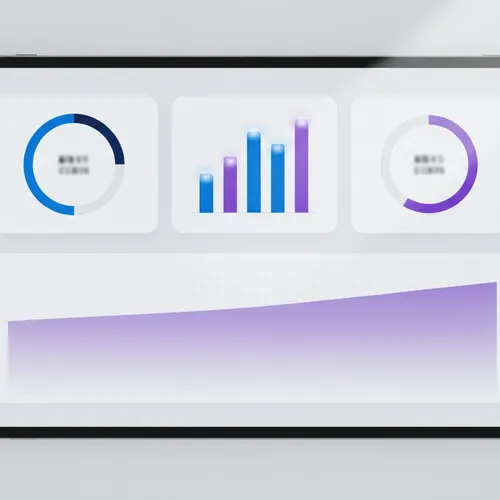
AiAgRe was built for that shape: scoped ingestion, per-customer rollups, and short-lived embed tokens so an agent dashboard renders inside your product, under your branding, showing each customer only their own runs.
The category
Observe, prove, remediate
Most tools stop at the first bucket. The second is where customers start believing you. The third is what keeps the failure rate falling.
Observe
Structured traces across agents, tools, and control flow, tied to a trace ID you can replay rather than reconstruct from logs.
Prove
Deflection rate, cost per resolution, and resolution rate computed from those traces, scoped per customer and defensible when someone asks how the number was derived.
Remediate
Cluster recurring failures by class, tighten the guardrails and limits that matter, then confirm the numbers actually moved instead of assuming they did.
FAQs
AI agent reliability: frequently asked questions
Common questions from teams taking agent frameworks from prototype to production.
What is AI agent reliability?
AI agent reliability is the degree to which an agent produces correct, bounded, repeatable outcomes in production — not whether the service responds. An agent can be fully available and still call the wrong tool, loop until it hits an iteration limit, or return a fluent answer that is false. Reliability work is about making those outcomes measurable and then making them rarer.
How is reliability different from AI agent observability?
Observability is the input: traces, spans, tool calls, cost, and evaluation signals that describe what the agent did. Reliability is the outcome you engineer with them: bounded loops, validated tool arguments, idempotent side effects, tested prompts, and a measured failure rate that goes down over time. Observability tells you an agent looped eleven times; reliability is the work of making sure it cannot. The best LLM observability tools roundup covers the input side in depth if that is the gap you are closing first.
Why are agent frameworks harder to make reliable than chains?
Because they add control flow the model decides at runtime. A chain runs a fixed sequence. CrewAI adds delegation between agents and, in the hierarchical process, a manager LLM that assigns tasks at runtime. LangGraph adds cycles, mutable shared state, and interrupts. Each one is genuinely useful, and each one means the execution path is a property of the run, not of your code — so it has to be recorded to be understood.
What should I measure to know if my agent is reliable?
Two layers. Engineering signals: failure rate by class (timeout, tool error, schema mismatch, loop-limit truncation, empty result), p95 latency, and cost per run. Business signals: deflection rate, resolution rate, and cost per resolution. The first layer tells you what is broken; the second tells you whether it matters to the people paying for the agent.
Do I need evaluations, or is monitoring enough?
You need both, and they answer different questions. Evaluations run known inputs against known-good outputs before a change ships, which catches regressions. Monitoring watches real traffic, where the inputs are ones you never thought to test. Teams that only evaluate ship confident regressions; teams that only monitor find every regression in production.
Which agent frameworks does AiAgRe support?
Anything that can emit OpenTelemetry using the GenAI semantic conventions ingests without code changes — CrewAI, LangGraph, LangChain, and LlamaIndex among them. The @aiagre/node SDK adds first-class outcome tracking for TypeScript and JavaScript services, and a plain JSON events API covers stacks that use neither.
Make your agent's reliability measurable
Request access and we'll help you instrument your first framework and scope a customer-facing dashboard.